





社内広報に「数字」が求められる時代
社内報が紙(冊子)からWebに移行したことで、「運用方法が変わった」と感じている担当者様もいるのではないでしょうか。例えば、以下のような変化です。
- 紙(冊子)には「季刊」「隔月」など一定の発行サイクルがあったのに対し、Webでは常に何かを発信し続けなければいけない
- 人的資本の開示義務が始まり、社内広報にまつわる数字をよりシビアに見られるようになった
- アクセスログでさまざまな指標を見られるようになったものの、どの数値をどう見ればいいのかわからない
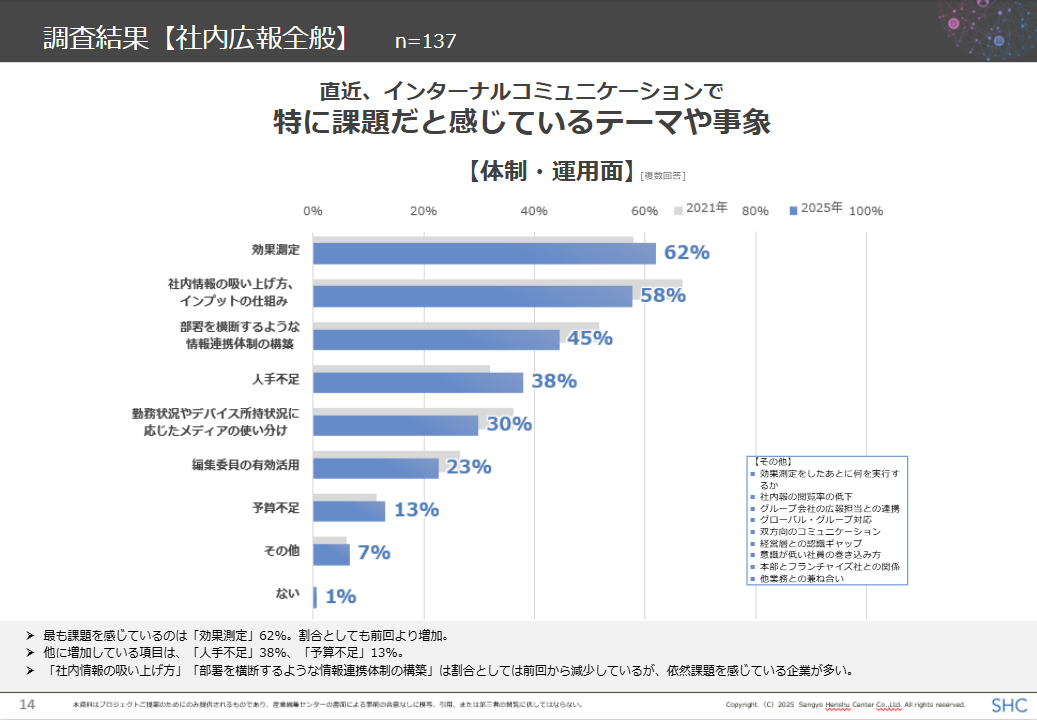
実際、産業編集センターがクライアント企業を対象に実施した「インターナルコミュニケーションに関する調査」※では、「直近、インターナルコミュニケーションで特に課題だと感じているテーマや事象【体制・運用面】」における課題として、62%と最も多く挙げられたのが「効果測定」でした。
(※調査期間:2025年8月25日〜2025年10月20日、回答社数:137件)
では、アクセスログなどの効果測定と、どう向き合うとよいのでしょうか。
With the shift from paper to web-based internal newsletters, some communications owners may feel that operational methods have changed. For example:
- While paper editions followed a fixed publication cycle, such as quarterly or bimonthly, web editions require continuous updates.
- With the introduction of mandatory human capital disclosure, metrics related to internal communications are being scrutinized more closely.
- Although access logs now provide a range of metrics, it can be unclear which ones to focus on or how to interpret them.
In fact, in an internal communication survey* conducted by Sangyo Henshu Center among its client companies, 62% of respondents identified “effectiveness measurement” as a key challenge in terms of structure and operations, making it the most frequently cited issue.
(*Survey period: August 25, 2025 to October 20, 2025; number of respondents: 137)
So how should we approach effectiveness measurement using access logs and similar data?
数値の先にある「課題発見」
アクセスログの「PV(ページビュー)数」「UU(ユニークユーザー)数」「離脱率」などの指標は、Web社内報の現状を知るための重要な手がかりになります。しかし、数値が示しているのはあくまで結果です。その背景にある「なぜ」は、ログだけでは見えてきません。
例えば、思うようにPV・UUが伸びなかった場合、いくつかの要因が考えられます。
企画や原稿、デザインには魅力はあったのか。
告知や掲載タイミングは適切だったのか。
そもそも媒体認知度そのものは十分なのか。
PV数・UU数だけでは、こうした因果関係を完全に明らかにすることは難しいものです。そのためにはアクセスログだけでなく、さまざまな効果測定の手法と組み合わせることが欠かせません。
Metrics such as PV (page views), UU (unique users), and exit rate provide important clues for understanding the current state of a web-based internal newsletter. However, these figures represent outcomes only. The underlying reasons behind them cannot be determined from the logs alone.
For example, if PV and UU aren’t as high as expected, several factors may be at play:
Were the planning, content, and design compelling?
Was the timing of announcements and publication appropriate?
Is awareness of the platform itself sufficient?
Understanding these cause-and-effect relationships with PV and UU alone is difficult. To do so, it is essential to combine access log data with a range of other measurement methods.
例えば、近年導入が増えている従業員エンゲージメントサーベイも、その一つです。企業風土や組織文化、人材の傾向、ワークスタイルなども、インターナルコミュニケーションに大きく影響します。
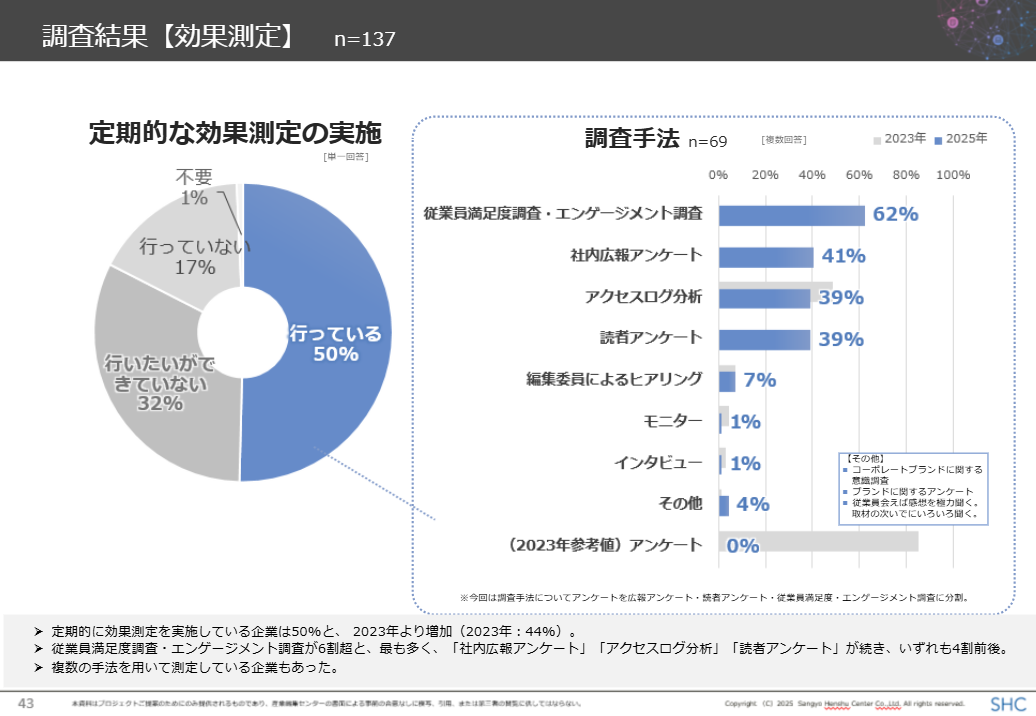
定期的な効果測定を実施している企業のうち、6割以上の企業が「従業員満足度調査・エンゲージメント調査」を実施している
他にも、クリエイティブ面のテクニカル分析や、コミュニケーションインフラの実態調査、従業員の「生の声」を収集するグループインタビューなどを用いて分析する場合もあります。
For example, employee engagement surveys, which have become more widely adopted in recent years, are one such method. Factors such as corporate climate, organizational culture, workforce characteristics, and work styles also have a significant impact on internal communication.
Other approaches include technical analysis of creative elements, assessments of the communication infrastructure, and group interviews to gather employees’ candid feedback.
数値を「対話の材料」にする
課題を発見し、改善施策に落とし込み、その結果を検証する。
そうしたPDCAサイクルを回す上で、特に重要なのは「比較対象を設定すること」と「推移を見ていくこと」です。
- KGI/KPIに対する達成度や進捗率を見る
- 対前年同月で比較する
- 定量と定性の相関関係を見る
- 特別な誘引施策の実施前後で動きを見る
- 数値の高い/低いコンテンツのクリエイティブの傾向を抽出する
- 職種ごとのコンテンツへの反応を比較する……など
その瞬間のPV数・UU数などの数値の増減に一喜一憂するのではなく、対象となる数値との比較から課題を抽出したり、クリエイティブも含めて分析することで傾向を見出したりすることで、議論や対話のベースにすること。ひいては、「次のアクションの意思決定を支援する材料」とすること。それが、Web社内報を中長期的に成長させるための効果測定だと、私たちは考えています。
社内報は立ち上げて終わりではなく、読者(社員)とともに育てていくメディアです。効果測定はそのための有効なツールとなります。ログという“情報”を有効活用することで、Web社内報は着実に成長させていくことができるのです。
Identify issues, make improvements, and verify the results. When running this PDCA cycle, two things are particularly important: setting benchmarks for comparison and tracking trends over time.
- Track achievement and progress against KGIs and KPIs
- Compare year-on-year for the same month
- Examine correlations between quantitative and qualitative data
- Analyze changes before and after special promotional initiatives
- Identify creative patterns in high- and low-performing content
- Compare responses to content across different job functions, etc.
Rather than reacting to short-term fluctuations in metrics such as PV and UU, the goal is to use comparisons with relevant benchmarks to identify issues and analyze trends, including creative aspects, and to use these insights as a basis for discussion and dialogue. Ultimately, they should serve as material to support decision-making on next actions. We believe this is what effectiveness measurement should be for: achieving the medium- to long-term growth of a web-based internal newsletter.
An internal newsletter is not something that is simply launched and left as is. It is a medium that grows together with its readers, the employees. Effectiveness measurement is a valuable tool in that process. By making effective use of the information contained in logs, a web-based internal newsletter can be steadily improved over time.