




「全員に届ける」ことが難しい時代
働き方や人材の多様化が進み、インターナルコミュニケーションにおける「メッセージの伝わり方」が変化しています。
この傾向は近年多くの企業が実施している「従業員エンゲージメント調査」にも表れています。従業員の属性によって各項目のスコアに差が見られるケースも少なくありません。
職種や職位、年齢、勤務地などが違えば、会社との距離感も、働くことへの価値観も、前提として有する知識や経験も、必要なサポートも異なります。
インターナルコミュニケーションにおいても、「同じ情報を、等しく全員に届ける」という発信だけでは、全員の認知・理解・共感にはつながらない――つまり、「全員に響くコンテンツ」をつくることが難しい時代になっているのです。
As work styles and the workforce become more diverse, the way messages are received in internal communication is also changing.
This trend is also reflected in employee engagement surveys that many companies have conducted in recent years. It is not uncommon to see differences in scores across employee groups.
Differences in job type, position, age, and work location also lead to differences in employees’ sense of connection to the company, their values toward work, their baseline knowledge and experience, and the support they require.
As such, simply delivering the same information to all employees does not lead to shared awareness, understanding, or buy-in. In other words, it has become increasingly difficult to create content that resonates with everyone.
「あなたに届ける」という発想
そうした中で注目されるのが、インターナルコミュニケーションの「パーソナライズ」です。
すでにSNSやECサイトなどでは、自分の興味や関心に添った情報がオススメに挙がってくることが当たり前になりつつあります。このような“自分に最適化された情報が届く仕組み”をインターナルコミュニケーションにも適用するのです。
とはいえ、この考え方が今までまったく意識されてこなかったわけではありません。
冊子の社内報でも、「ある特定の属性を意識した企画」はこれまでも一般的に掲載されてきました。しかし、発行回数や紙幅が限られる中では、どうしても「全員に届ける情報」を優先せざるを得ない……という制約があったのも事実です。
一方、Web社内報ではそうした制約が弱まり、従業員の属性ごとに情報を発信することも可能になりました。社員が求める情報ニーズを把握することで、今まで以上に相手に寄り添った、いわば「あなたに届ける」インターナルコミュニケーションが実現できるようになったのです。
In this context, the personalization of internal communication is attracting more attention.
On social media and e-commerce sites, it is becoming standard for users to receive recommendations based on their interests and preferences. This kind of system, in which information is tailored to the individual, can also be applied to internal communication.
That said, this way of thinking is not entirely new.
Even in print newsletters, it has been common to feature content aimed at specific employee groups. However, with limited publication frequency and space, there were constraints that made it necessary to prioritize information intended for all employees.
By contrast, these constraints are less restrictive with web-based newsletters, making it possible to deliver information tailored to different employee segments. By understanding employees’ information needs, organizations can create internal communication that is more closely aligned with the individual, effectively delivering content that is personally relevant.
パーソナライズ実現の後押しになるもの
では社内報をパーソナライズしていくためには、何が必要なのでしょうか。
1つは「調査に基づいた戦略設計」です。
- ターゲットの従業員層は、どんな情報が知りたいのか
- どんな悩みを抱えているのか
- どんな価値観に共感しているのか
そうしたニーズやインサイトを把握することで、一定の根拠のもとに「誰に、何を、どのタイミングで届けるのか」の判断ができるようになるからです。
So what is necessary to personalize internal company newsletters?
One key element is strategic design based on surveys. This involves understanding:
- what information target employee groups want to know
- what issues they are struggling with
- what values they resonate with
By understanding these needs and insights, it becomes possible to decide, based on evidence, who should receive what information and when.
また、パーソナライズをさらに発展させるのが「ログイン認証」を含むデジタル基盤の進化です。
私たち産業編集センターがクライアント企業を対象に実施した調査※では、「Web社内報の仕様」について、2023年時点では「共通ID・パスワード(を採用している)」と回答した企業が圧倒的(約7割)だったのに対し、2025年は「他のシステムとの認証連携」が最多(37%)となりました。
(※調査期間:2025年8月25日〜2025年10月20日、回答社数:137件)
Another factor that contributes to personalization is the evolution of digital infrastructure that includes login authentication.
In an internal communication survey* conducted by Sangyo Henshu Center among its client companies regarding the specifications of web-based internal newsletters, the 2023 results showed that the overwhelming majority (about 70%) used a shared ID and password. In contrast, in 2025, “authentication linked with other systems” became the most common response (37%).
(*Survey period: August 25, 2025 to October 20, 2025; number of respondents: 137)
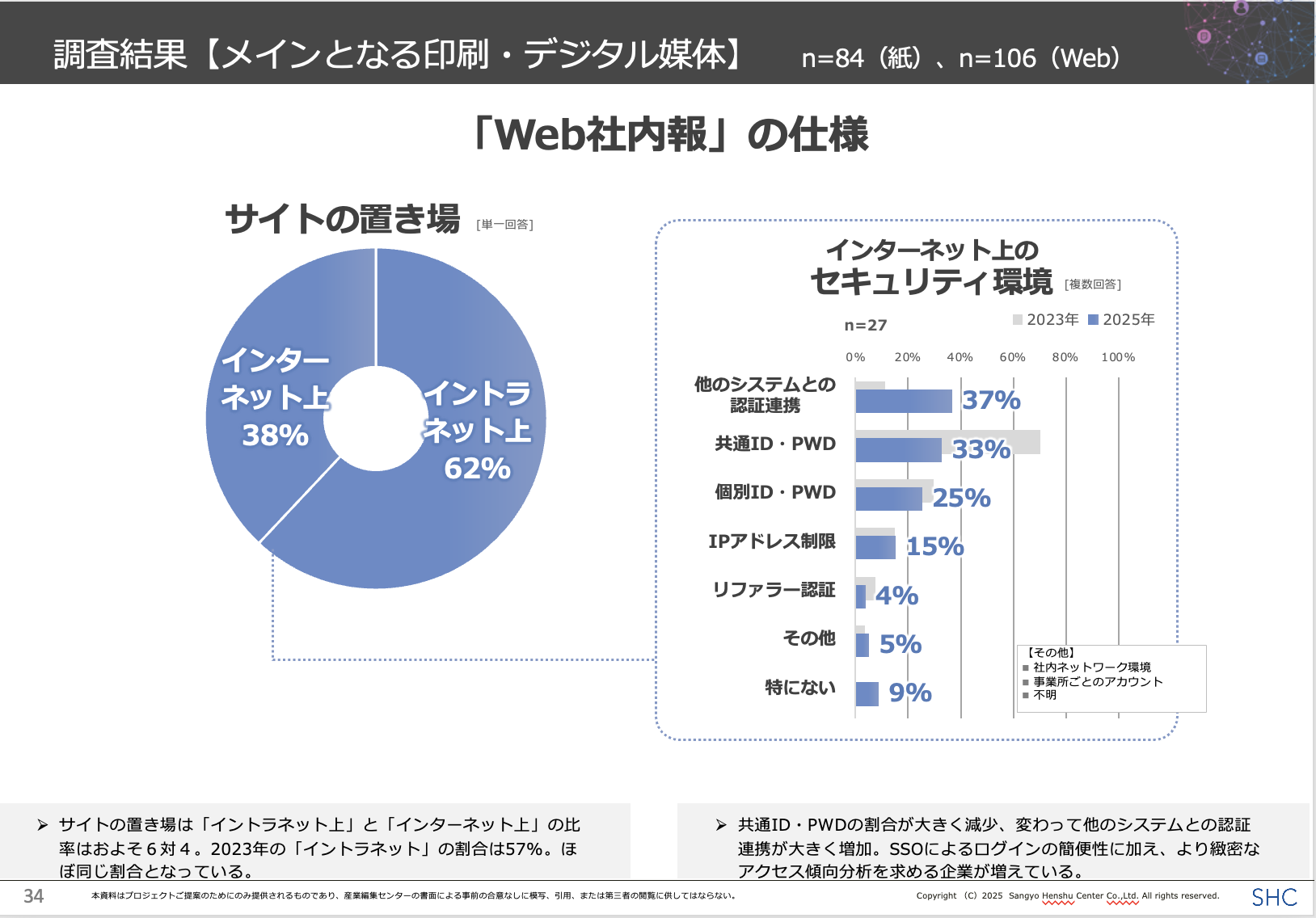
この変化は、よりセキュアな環境が求められた結果であると同時に、受け手の属性を意識したコミュニケーションが主流になりつつある表れとも言えそうです。
こうしたデジタル基盤の変化も、パーソナライズを後押ししていくと私たちは考えています。
This shift reflects both a growing need for more secure environments and a sign that personalized communication is becoming the norm.
We believe that these changes in digital infrastructure will contribute to personalization.
全員も、あなたも大事
ただし、「全員に届けるコミュニケーション」が不要になったわけではありません。
たとえ受け手によって解釈が変わろうとも、「全員が同じメッセージを受け取ること」自体に価値がある場合もあります。大切なのは、「ニーズやインサイトに基づく発信をすること」です。届けたい内容やタイミングに応じて、「全員」と「あなた」を使い分ける。パーソナライズは、「誰に・どのような体験を届けたいのか」をあらためて考えるきっかけにもなるのです。
情報は発信しているのに、なかなか社員に読んでもらえない。読んではもらえているけれど、なかなか行動に結びつかない。もし今、そんな状況に直面しているならば、パーソナライズの考え方が有効な解決策の一つになるかもしれません。
「全員」も「あなた」も大事にする多角的な視点で、私たちが一緒にインターナルコミュニケーション設計を考えていきます。
However, this does not mean that communication aimed at everyone is no longer necessary.
Even if messages are interpreted differently depending on the recipient, there are cases where simply ensuring that everyone receives the same message still has value. What matters is communicating based on needs and insights. Depending on the content and timing, communication should be used appropriately for both everyone and individuals. Personalization also serves as an opportunity to reconsider who you want to reach and what kind of experience you want to deliver.
If information is being sent out but employees are not reading it, or if they are reading it but it is not leading to action, personalization may be one effective solution.
What matters is designing internal communication from a multifaceted perspective that takes both the group and individuals into account.